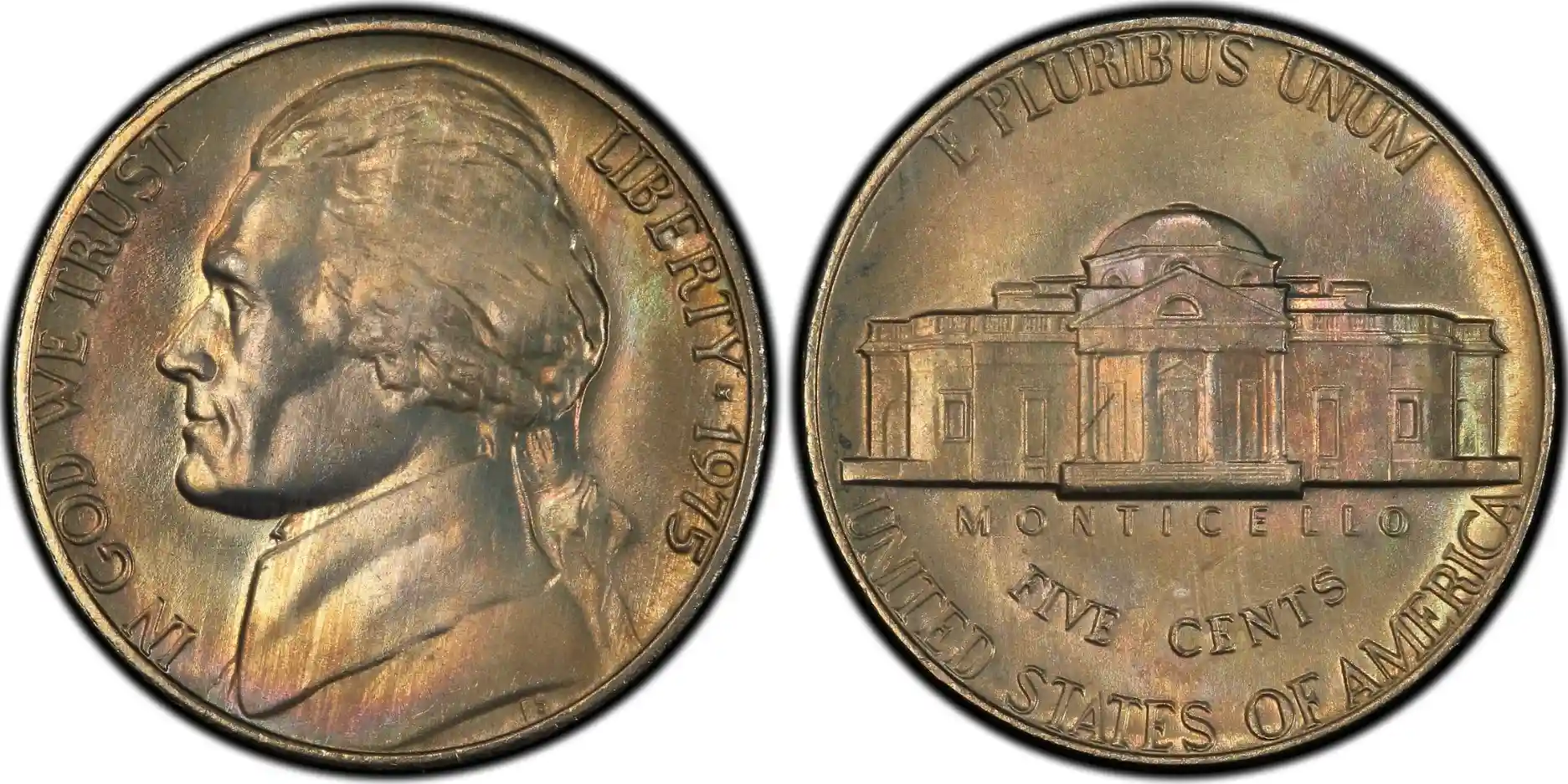
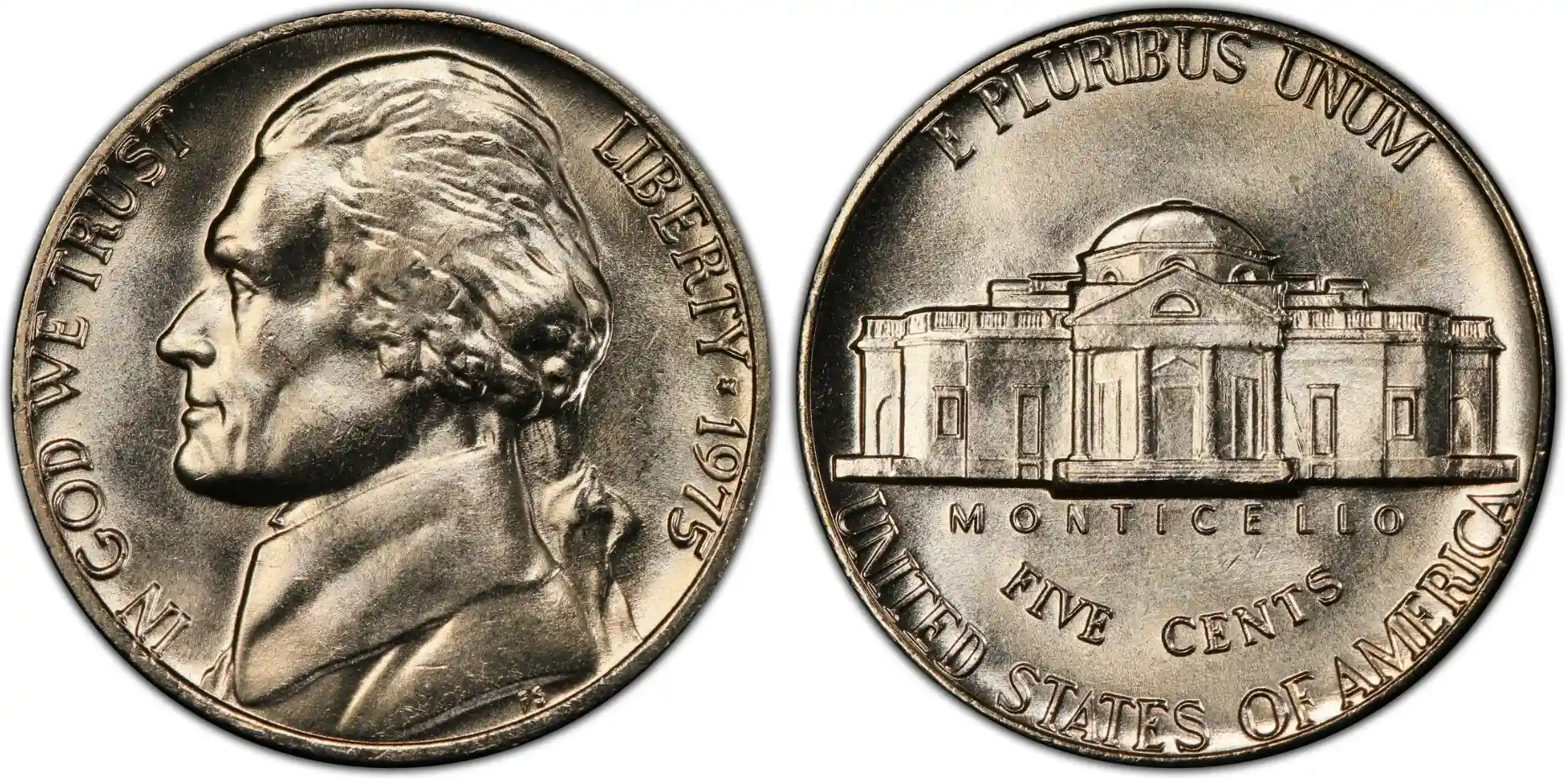
Most 1975 nickels remain inexpensive. Exceptional condition or unusual characteristics change market value completely. Common 1975 nickel coins trade for $0.05 to $0.15. Pieces with good shine show $0.50 to $2 market value. Record auction sales for perfect MS-67 pieces reach $150 to $300. Market value depends heavily on professional grading services.
| Condition Grade | Market Price |
| Good Circulation | $0.05 to $0.08 |
| Fine State | $0.10 to $0.25 |
| MS-60 State | $1.50 to $3 |
| MS-67 State | $150 to $300 |
Technical Data
- Material: Metal blend
- Width: 21.2 millimeters
- Weight: 5 grams
- Thickness: 1.95 millimeters
Price Factors
Coin market price changes under various outside pressures. Improper storage causes metal corrosion. Corrosion lowers item value to $0.05 face value immediately.
Professional Grading
Certified MS-66 coin pieces have $40 to $60 market value. Similar pieces without paper certification sell with 30% to 40% discount.
Market Factors
- Damage removal: Price growth
- Surface darkness: Price drop
- Circulation signs: $0.05 value
Mint Errors
Pieces with production mistakes offer higher investment value.
Double Die
Image duplication creates $50 to $150 value.
Off Center
Stamp shifts on coin center add $20 to $40 value. Half-center shifts create $100 to $200 value.
Clipped Planchet
Cut edges add $15 to $30 value.
Price Trends
Top-grade coin pieces show 3% to 5% yearly price growth. Circulated coin pieces show 0% growth. Current market value stays at $0.05.
Storage Tips
Cheap plastic holders with chemical substances cause green spots. Spot damage lowers $2 coin value to $0.05.
- Use acid-free capsules
- Avoid direct sunlight
- Keep dry storage
Sales Examples
Auction data shows current reality:
- MS-65 market price: $10 to $15
- Record price: $385
- Average auction price: $0.05 to $0.15
Grading Impact
MS-64 and MS-65 price gap reaches 200%. Investors choose MS-65 minimum grade for portfolio growth.
| Grade | 2020 Price | 2026 Price |
| MS-64 | $4 | $5 |
| MS-65 | $8 | $12 |
| MS-66 | $30 | $45 |
Investment Segments
Market segments define coin price niches.
Investment Level
MS-66 and higher pieces cost $45 to $300. Expert certification is vital for liquidity.
Collection Level
MS-63 to MS-65 pieces cost $2 to $15. Surface quality decides final price.
Circulation Level
$0.05 to $0.10 pieces offer no profit.
Defect Impact
| Defect Type | MS-65 Original Price | Post-Defect Price |
| Surface scratch | $12 | $0.20 |
| Corrosion spots | $12 | $0.05 |
| Edge marks | $12 | $0.50 |
Online Auction Sales
Average MS-64 closing price stays near $4.50. Price range covers $3.50 to $6.
Price boosts include:
- Mint set packaging
- First strike status
- No handling signs
Price Psychology
Collectors pay 30% more for higher grade thresholds. MS-65 sells better than MS-64+. Investors trade MS-64+ pieces for MS-65 grade upgrades.
Profit Odds
Standard roll purchases at $20 face value offer mixed results:
- MS-60 to MS-63 finds: 85% odds with 50% profit
- MS-65 finds: 10% odds with 400% profit
- Rare error finds: 5% odds with 5000% profit
Regional Prices
USA market prices remain steady. European export sales add 10% to 20% price increases due to shipping costs.
Storage Risks
High humidity ruins investments. Damp rooms cause oxidation spots on nickel surfaces. $12 coin value drops to $0.10 within 12 months.
Evaluation Tools
High-power lens use helps detect hidden defects. Invisible scratches lower coin price from $12 to $0.50.
2027 Price Forecast
MS-66 piece growth will likely hit 2% to 4%. Defective pieces stay in $0.05 to $0.10 range.
Portfolio Tips
- Buy MS-66 pieces
- Demand certification
- Insure collection pieces
MS-66 portfolio construction requires $4500 investment. Yearly yield projections reach $225.
Variety Market
Minimal stamp deviation pieces reach $25 to $50 on specialist sites. Catalogue code knowledge remains key.
Economic Value
Grading costs hit $20 to $35. $5 coin grading fails financial tests. Only $60+ value coins need certification.
Raw Material Bets
Buying bulk uncertified coins brings high risk. $0.15 unit price costs $75 for 500 coins. 2% MS-65 yield brings $120 total value. $45 profit requires large volume sorting work.
Surface Cleanliness
Nickel surfaces attract dust. Abrasive dust creates hair lines. Micro-scratches lower MS-65 to MS-63. $8 value loss happens instantly.
Mint Sets
1975 mint sets cost $15 to $25. Nickel coin value within sets hits $6. Set splitting strategies increase MS-65 finding success.
Big Deal Pricing
Wholesale buyers pay 20% to 30% below market price. $0.08 unit price sets MS-60 wholesale standards. Volume remains the only profit source.
Inflation Effect
Nickel investments lose ground to gold or silver. 1975 $0.05 value equals $0.30 today. Only MS-66+ piece purchases bring real profit.
Storage Costs
Wooden cabinets with humidity control offer protection. $200 equipment cost saves $1000 in potential losses for 50 MS-66 pieces.
Year Comparisons
1976 MS-66 nickel prices reach $50. This piece costs 10% more than 1975 versions. Portfolio diversification helps reduce risk.
Price Volatility
MS-64 nickel price stays at $4 to $5. Low volatility makes these coins capital preservation tools rather than speculative assets.
Bad Bets
1000 nickel purchases at $0.20 per piece cost $200. No errors found reduces piece value to $0.10. $100 loss results from poor pre-purchase review.
Quality Marks
Clear fields add 15% to piece price. Cameo-like stamp quality drives prices to $18.
Grade Yields
- MS-63: $2 to $3
- MS-64: $4 to $6
- MS-65: $10 to $15
- MS-66: $40 to $60
- MS-67: $150 to $300
Auction Fees
15% to 20% auction commissions eat profit. $50 sales result in $40 net. Target purchase prices must sit 30% lower than projected sale prices.
Long-term Strategy
$45 MS-66 piece purchases aim for $70 sales. This 5% yearly yield strategy offers security.
Mintage Relations
High 1975 mintage keeps prices down. Massive MS-64 counts set $4 to $6 price ceilings. Only MS-66+ supply scarcity drives price growth.
Portfolio Yields
MS-65+ portfolios yield 8% yearly given 10% lower buy prices. Without expert eyes, yield drops to 1% or 2%.
Stamp Evaluation
Grinding marks increase price by 5%. Marks prove surface originality rather than cleaning work.
Expert Role
Uncertified price remains a subjective guess. Certified price creates market constants. Value gaps hit 400%. Only experts buy raw coins.
Beginner Tips
MS-65 grade pieces provide the best price liquidity balance. $10 to $15 costs allow lower risk. MS-66 buys require higher skill levels.
Cleaning Costs
Coin cleaning destroys market value. $12 MS-65 pieces become $0.05 worth immediately. Chemical shine removal kills investment potential.
Strategic Asset Management
Market timing creates small gains. Daily coin price tracking helps identify buy points. 3% price dip triggers massive buy activity. Smart traders keep dry powder funds.
Market Liquidity Constraints
Low-grade coins show zero liquidity. Investors cannot exit positions easily. High-grade MS-67 coins show fast turnover. Buyer demand stays high. Seller speed remains key.
Data Accuracy Necessity
Wrong grading ruins portfolio math. Professional verification saves capital. Mistakes cost 50% equity. Proper research minimizes errors. Accuracy protects investment capital.
Bulk Sorting Strategy
Large lot purchases require patience. 5000 piece lots contain hidden gems. Manual sorting takes long hours. 10 hours work nets $50 extra gain. Efficient sorting methods improve hourly return.
Professional Networking
Networking gains market access. Access to early auction listings increases profit margin. Private deals often beat auction prices. Building contacts saves commission fees.
Tax Implications
Investment profits carry tax duties. Detailed records simplify filing. Tracking cost basis ensures legal safety. Capital gains tax reduces final yield. Professional advice helps planning.
Quality Control Standards
Strict standards drive value. Loose control invites fake coins. Fakes destroy portfolio reputation. Verified coins command premium pricing. Buyers trust certified assets.
Market Cycle Awareness
Cycles repeat every decade. 1975 coin cycles match broader markets. Timing entry matters. Buying tops leads to heavy losses. Selling bottoms misses profit potential.
Diversification Logic
Single coin reliance invites disaster. Multi-year portfolios smooth volatility. Including gold or silver balances risk. Risk management prevents total wipeout. Stability requires diverse holdings.
Risk Assessment Framework
Assess coin quality before purchase. 10% surface defect lowers value 90%. Avoid “problem” coins completely. Buy only eye-appealing assets. Quality prevents future sales issues.
Exit Strategy Formulation
Plan sales before buying. Knowing target sale prices keeps discipline. Greed leads to holding too long. Sell at predefined profit levels. Discipline produces consistent results.
Asset Longevity
Coins survive centuries if stored right. Proper care maintains value 50 years. Neglect ruins value 5 years. Long-term mindset pays off. Protection is primary duty.
Market Sentiment Tracking
Sentiment drives short-term price swings. Fear drops prices. Greed inflates prices. Track sentiment to avoid overpaying. Stay calm during market panics.
Investment Education
Constant learning builds expertise. Reading coin catalogs refines skills. Attending coin shows provides insights. Experts make fewer mistakes. Knowledge is capital foundation.
Final Review Procedures
Check every detail twice. Lens inspection catches microscopic flaws. Compare price vs value carefully. Avoid impulse buying decisions. Success requires deep preparation.